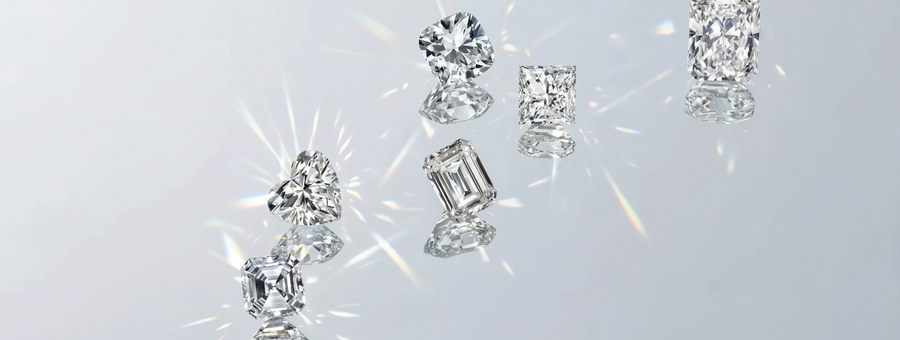
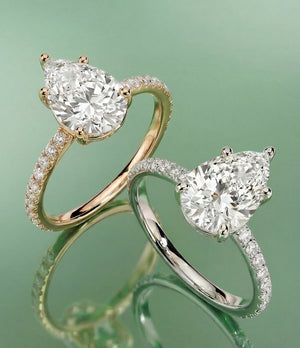
Four yellow gold solitaires with marquise, oval and pear diamonds on cream satin

Education 6 min read Updated

What Are Lab Grown Diamonds?

Lab grown diamonds are created under strict scientific conditions so that they have the same chemical and optical properties as natural diamonds.

A lab grown diamond is a real diamond that is grown in a laboratory instead of mined from the earth. It is pure carbon in the same crystal as a natural diamond, with the same hardness (10 on the Mohs scale), the same refractive index (2.42) and the same fire. It is grown in days to weeks, by one of two methods, HPHT or CVD, instead of over billions of years underground. Laboratories such as IGI and GIA issue grading reports for it, and it costs less than a natural diamond of the same size and quality.

The experts you can trust: We take pride in covering all of the fine details that our customers deserve to know because it’s the only way to offer a fully transparent service. Keep reading to learn more, or get in touch with Yareli, our founder and designer, to ask anything you would like to know.

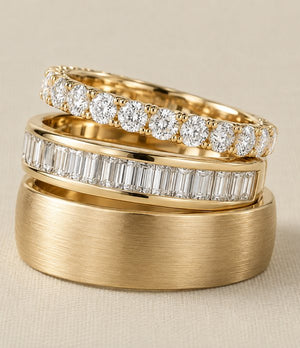
Three yellow gold rings on white: a step-cut diamond eternity band, a marquise ring with a pavé band and an oval solitaire

What Is a Lab Grown Diamond?

Lab grown diamonds are diamonds that have the same hardness, brilliance, and other properties as natural diamonds. This is achieved by experienced scientists who work under strict laboratory conditions. Lab grown diamonds can be brought to life in a matter of weeks, whereas natural diamonds formed deep in the ground over billions of years.

There are two ways to grow one. HPHT (high pressure, high temperature) recreates the crushing heat and pressure deep inside the earth: carbon dissolves in molten metal and crystallizes onto a small diamond seed. CVD (chemical vapor deposition) builds the diamond layer by layer from a carbon-rich gas, onto thin diamond seed plates in a vacuum chamber. Both make real diamond, and once a stone is cut, polished and graded, the method no longer decides how it looks. Our guide to CVD vs HPHT lab-grown diamonds explains each method and how to read it on a grading report.

Are Lab Grown Diamonds Real?

Are Lab Grown Diamonds Real?

You can safely consider lab grown diamonds to be as real as natural diamonds, but you should also be aware of the misconceptions that are out there:

  • It is not true that a lab diamond is in any way ‘fake’ because it has all of the same properties as a natural diamond
  • It is not true that any expert can immediately spot a lab grown diamond. To tell the difference, they need specialist viewing equipment and enough time for a comprehensive study.
  • It’s not true that natural diamonds are stronger because lab grown diamonds and natural diamonds rate exactly the same when tested for hardness.
  • It’s not true that one of the tell tale signs of a lab grown diamond is that it is flawless. Just like a natural diamond, there can be inclusions within the structure.

Both types of diamond are 100% real, have the same properties, and only differ in terms of how they are produced.

US law agrees. In 2018 the Federal Trade Commission removed the word “natural” from its definition of a diamond, so a lab grown diamond is a diamond in the eyes of US law. Sellers must say clearly that it is lab-grown, laboratory-grown or laboratory-created, and grading reports do the same.

Lab Grown Diamonds vs. Natural Diamonds

A quick comparison will show just how much these two types of stone have in common.

FeatureLab Grown DiamondsNatural Diamonds
Durability

10 on the Mohs scale

10 on the Mohs scale

Brilliance

Refractive index ranges from 2.417 to 2.419

Refractive index ranges from 2.417 to 2.419

Color

Mostly colorless, but have the potential for vivid shades

Mostly colorless, but comes in shades such as yellow and pink

Grading

Grading focuses on cut, color, clarity, and carat

Grading focuses on cut, color, clarity, and carat

Certification

Always assessed by trusted gemological institutions

Always assessed by trusted gemological institutions

Origin

Created in controlled laboratories before being cut and polished

Formed deep in the ground over billions of years before being mined

Rarity

Produced in increasing quantities as technology improves

Limited quantities as a result of varied geological conditions

Price

Lower cost due to higher levels of availability

Higher cost due to overheads involved with mining

What’s the Difference Between Lab Grown & Natural Diamonds?

What’s the Difference Between Lab Grown & Natural Diamonds?

A vastly experienced gemologist using specialist high magnification equipment is the only person who will be able to spot the following:

  • Internal Growth Patterns: Slight variations in the octahedral growth pattern.
  • Inclusions: Natural diamonds often include mineral inclusions, while lab grown inclusion tend to be metallic.
  • Laser Inscription: The majority of lab diamonds have a girdle inscription showing their lab of origin.

Unless you are a gemologist with years of experience and you have access to specialist equipment, you will find it impossible to tell the difference. This is because the way that lab grown diamonds are formed is designed to carefully mimic the natural formation process that occurs deep in the ground.

Is a Lab Grown Diamond Better?

Is a Lab Grown Diamond Better?

There are a number of benefits of lab grown diamonds, including:

  • Sustainability: The laboratories used have tiny carbon footprints compared to the expansive mining operations needed to locate and remove natural diamonds.
  • Aesthetics: Lab diamonds have all of the same optical and chemical properties as natural diamonds, allowing them to have exactly the same appearance.
  • Choice: Opting for lab diamonds gives you access to a greater range of hues and tones, as well as more vivid shades, when compared to natural diamonds.
  • Value: There are far fewer overheads in the supply chain for lab grown diamonds, resulting in a more cost-effective solution when you want something beautiful.

Lab Grown Diamond Certifications

Gemological specialists, such as the Gemological Institute of America (GIA) and the International Gemological Institute (IGI), grade lab grown diamonds. IGI grades them on the same 4 Cs as natural diamonds, and since October 2025 GIA describes them as Premium or Standard instead of giving color and clarity grades. Either report states that the diamond is laboratory-grown, ensuring that everyone who opts for the sustainable option of a lab grown stone can sleep with peace of mind. Exactly what you want to hear when you’re looking to get something that is everything you want it to be.

Lab Grown Diamonds FAQ

Are lab grown diamonds considered real diamonds?

Yes. Lab grown diamonds have the same chemical composition, optical properties, and physical structure as natural diamonds. The only difference is how they were formed.

How are lab grown diamonds made?

In one of two ways. HPHT recreates the heat and pressure deep inside the earth, so carbon dissolved in molten metal crystallizes onto a small diamond seed. CVD builds the diamond layer by layer from a carbon-rich gas in a vacuum chamber. Both make real diamond; CVD vs HPHT compares the two.

How long does it take to grow a lab diamond?

Days to weeks, depending on the method and the size. Modern HPHT presses can grow large, very white diamonds in days to weeks, and CVD diamonds usually grow over several weeks. A natural diamond formed over billions of years underground.

Why are lab grown diamonds less expensive?

Lab grown diamonds can be produced on a predictable timeline without the costs associated with large scale mining operations. That efficiency in the supply chain results in a more accessible price for the buyer.

Are lab grown diamonds sustainable?

Their main sustainability advantage is that they avoid mining. A lab grown diamond is grown in a laboratory instead of being dug out of the earth, so it needs none of the expansive mining operations used to locate and remove natural diamonds. Growing a diamond does take a lot of energy, so its footprint also depends on how the grower's electricity is produced. Its origin is transparent too: the grading report states that the diamond is laboratory-grown.

Will a lab grown diamond hold its value?

Not at resale. Like all diamonds, lab grown stones are not typically purchased as financial investments. They are purchased as symbols of love and commitment. On that measure, they hold all the value that matters.

Can a jeweler tell if my diamond is lab grown just by looking at it?

No. Even an experienced gemologist cannot identify a lab grown diamond with the naked eye. Specialist equipment and a detailed examination are required to spot the subtle internal differences.

Do lab grown diamonds pass a diamond tester?

Yes. A lab grown diamond is real diamond, so it passes a thermal diamond tester just as a natural diamond does. A few, mostly HPHT stones with a trace of boron, can read as moissanite on a multi-tester that also checks electrical conductivity. How to Tell if a Diamond Is Real covers every test.

Do lab grown diamonds come with grading certificates?

Yes. Reputable lab grown diamonds are assessed and certified by institutions such as IGI and GIA. IGI grades them on the same 4 Cs as natural diamonds; since October 2025, GIA describes them as Premium or Standard.

What is the International Gemological Institute (IGI)?

The International Gemological Institute (IGI) is an independent diamond grading laboratory, founded in Antwerp in 1975, with laboratories in diamond centers around the world. It grades more lab grown diamonds than any other laboratory and gives each one the full 4 Cs, the same cut, color, clarity and carat scales used for natural diamonds, and its report states that the diamond is laboratory-grown. IGI vs GIA compares it with the Gemological Institute of America.

Are lab grown diamonds a good choice for an engagement ring?

Absolutely. They are just as hard, just as brilliant, and just as stunning as natural diamonds, with the added benefit of a more transparent origin and a more accessible price point.